
How Handmade Rugs Are Made: A Journey from Raw Materials to Finished Rugs
There’s something special about a handmade rug that’s difficult to capture in a product description. You can see the colors and pattern, feel the texture, and admire the finished piece but what you’re really looking at is the result of many small decisions made by skilled hands.
The journey begins long before a rug reaches a living room. From selecting natural fibers to weaving, printing, tufting, washing, and finishing, handmade rug manufacturing combines traditional craftsmanship with careful quality control.
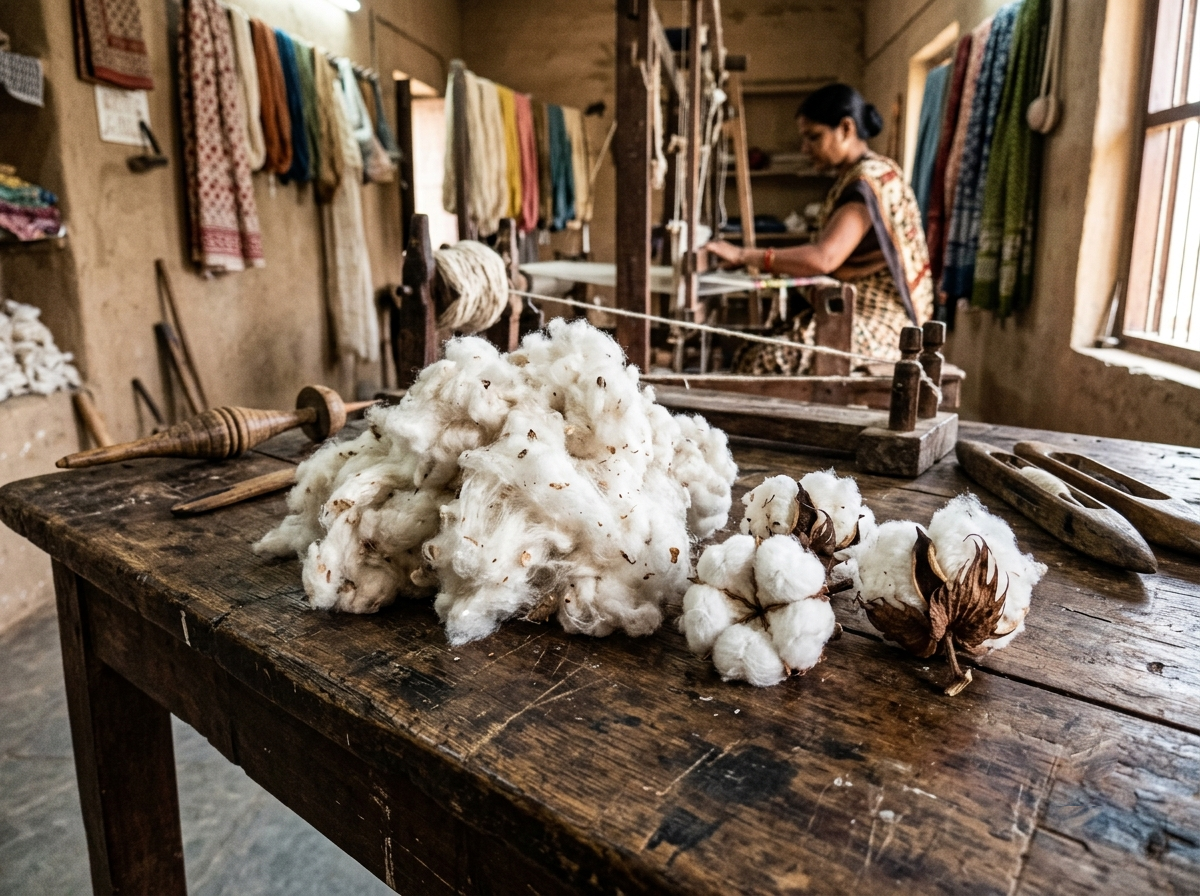
Where Handmade Rugs Begin: Choosing the Right Material
Every rug starts with its raw material, and the choice affects everything from appearance to durability.
Cotton is widely used for lightweight, comfortable rugs because it is soft, versatile, and relatively easy to maintain. A Cotton Rug can be woven, printed, tufted, or stitched into different styles depending on the desired finish.
Other handmade rugs may use wool, jute, hemp, recycled fibers, or blends. Before production begins, fibers are checked for consistency, strength, color, and cleanliness.
This first stage may seem simple, but it sets the foundation for the finished rug.
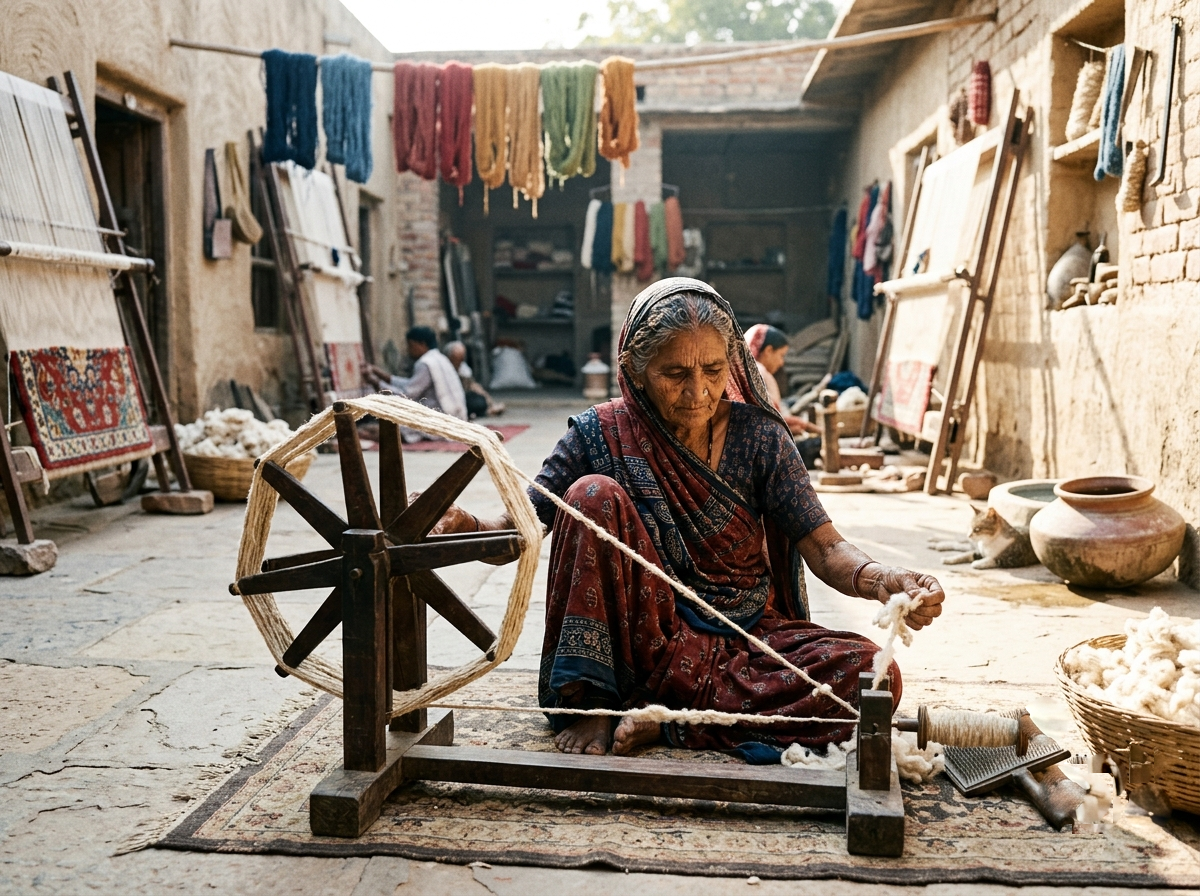
Preparing Yarn and Fabric
Once the material is selected, it needs to be prepared for production. Cotton and wool fibers are processed into yarn, while fabrics used for printed rugs are prepared and cut according to the design requirements.
For rugs featuring detailed patterns, consistency matters. Uneven yarn thickness or poorly prepared fabric can affect the final texture and appearance.
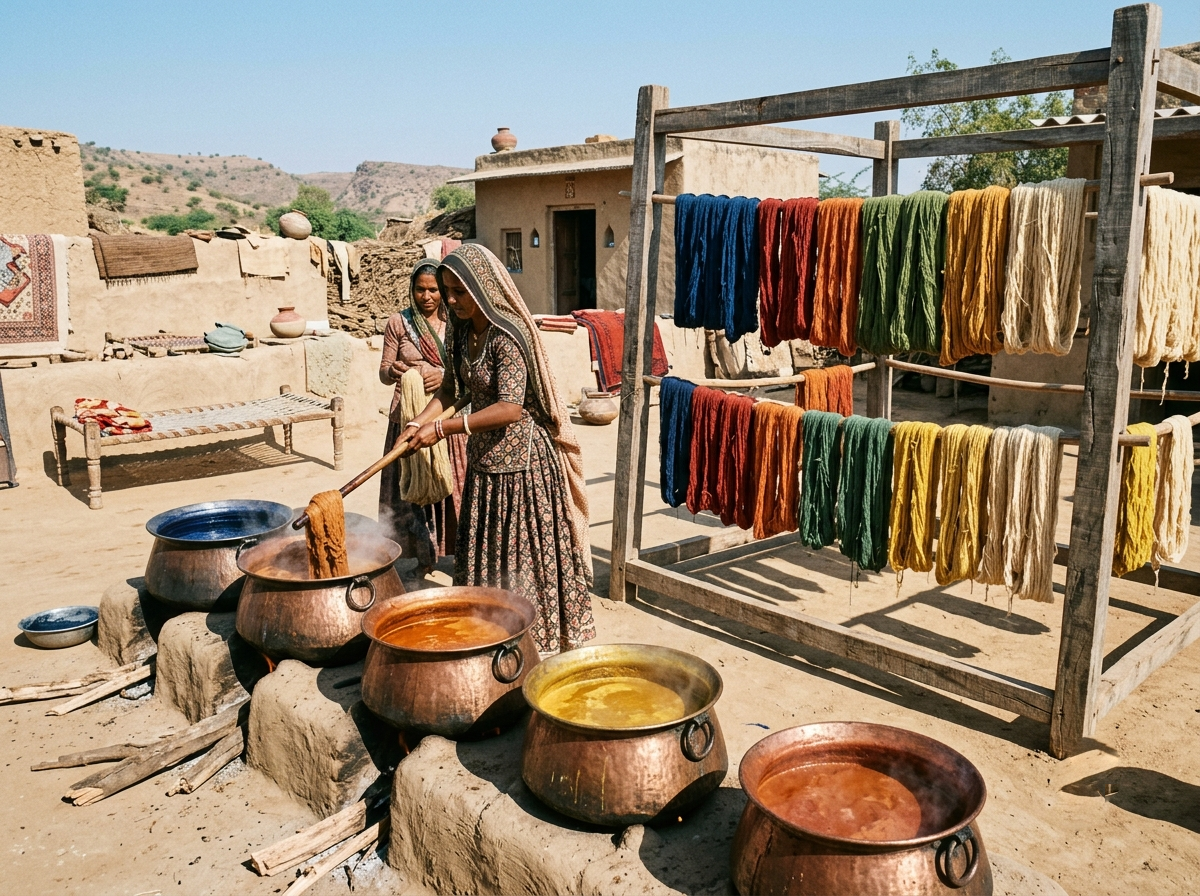
This is also where colors are carefully considered. Depending on the rug-making technique, yarn or fabric may be dyed before construction, while printed designs are applied later.
Weaving, Tufting, Printing, and Braiding
This is where the rug truly begins to take shape.
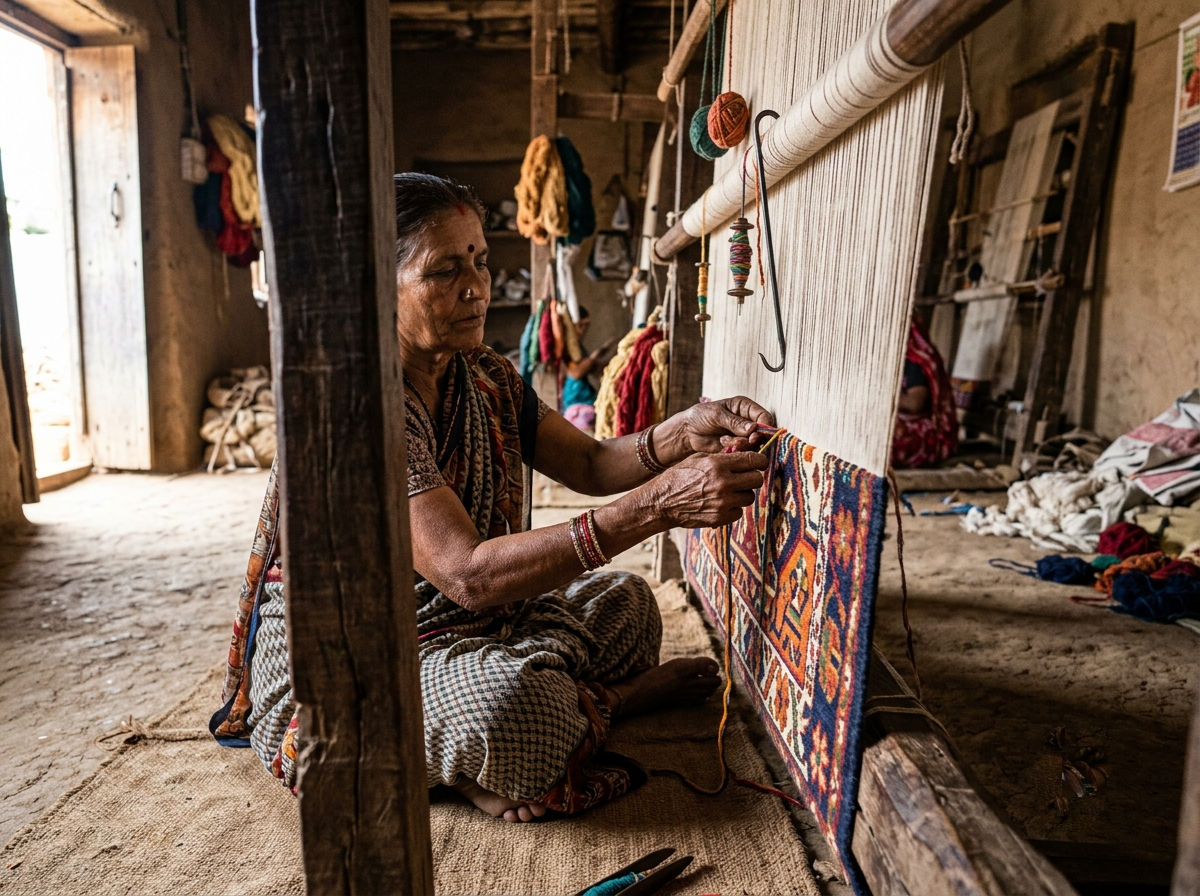
Traditional weaving involves interlacing yarns on a loom to create a structured surface. Tufting, on the other hand, involves inserting yarn into a backing material to build the pile. Braided rugs are constructed by carefully forming and joining strips or cords.
A Hand Block Prined Rug follows a different path. Artisans use carved wooden blocks to apply patterns to fabric, often repeating the process carefully across the surface. Small variations are natural and can give each piece its own character.
A Cotton Kantha Rug may involve stitching layers of cotton together, creating the distinctive textured appearance associated with kantha-inspired craftsmanship.
Creating Patterns and Designs
Design is more than decoration, it influences how a rug feels within a room.
A Geometric Rug can introduce structure and visual rhythm, while a Floral Rug tends to create a softer, more organic atmosphere. Color makes an equally noticeable difference. A Blue Rug, for example, can bring a calm, cool quality to a space, while earthy neutrals tend to create a warmer and more understated look.
Before production, patterns are often planned according to the rug's dimensions. This becomes particularly important with larger or Custom Rug designs, where proportions need to remain balanced.
Washing and Finishing the Rug
After the main construction is complete, the rug goes through finishing processes. Loose fibers are trimmed, edges are checked, and the surface is inspected for inconsistencies.
Some cotton rugs are washed to soften the material and give them a more relaxed appearance. This is one reason a Washable Rug can be especially practical for busy homes, but washing requirements vary, so care instructions should always be followed.
Quality checks are essential at this stage. Dimensions, edges, stitching, color, surface texture, and overall construction are examined before the rug is considered finished.
Why Handmade Rugs Have Individual Character
One of the charming things about handmade rugs is that they aren't perfectly identical. Slight differences in weaving, printing, stitching, or color can occur because real people, not automated machines, are involved in the process.
That doesn't mean poor quality. In many cases, those subtle variations are part of the craftsmanship.
From Raw Fiber to Finished Rug
The manufacturing journey is a combination of material selection, preparation, skilled construction, detailed design work, finishing, and inspection. Whether it's a simple cotton floor covering or an intricately patterned handmade piece, every stage contributes to the final result.
The next time you walk across a handmade rug, take a moment to look closely. There may be much more beneath its surface than meets the eye, a long chain of materials, techniques, patience, and human craftsmanship that turned simple fibers into something designed to become part of a home.
FAQs
1. How are handmade rugs made?
Handmade rugs are created using techniques such as weaving, hand tufting, hand braiding, block printing, and stitching. The process typically includes selecting raw materials, preparing yarn or fabric, creating the design, constructing the rug, trimming, washing, and final quality inspection.
2. What materials are commonly used to make handmade rugs?
Common materials include cotton, wool, jute, hemp, and recycled fibers. Cotton is particularly popular for lightweight and versatile rugs, while wool and natural plant fibers are often chosen for their texture and durability.
3. Are slight variations normal in handmade rugs?
Yes. Small differences in color, texture, stitching, or pattern are normal because handmade rugs are produced by artisans rather than completely automated machines. These subtle variations are often part of their unique handmade character.
4. How long does it take to make a handmade rug?
The production time depends on the rug's size, material, design complexity, and manufacturing technique. A simple rug may take considerably less time than a detailed hand-tufted, woven, or hand-stitched design.
5. Can handmade rugs be made in custom sizes and designs?
Yes. Many handmade rug-making techniques allow customization of size, shape, colors, patterns, and materials. Custom production is especially useful when a standard rug size doesn't fit a particular room or interior layout.