How to Buy Rugs Direct from a Manufacturer: A Complete B2B Guide
Buying rugs directly from a manufacturer can make a real difference for retailers, interior designers, hospitality businesses, and wholesalers. Instead of purchasing through several layers of distribution, you’re dealing much closer to the source, where materials, construction, customization, packaging, and production schedules are actually managed.
But here’s the thing: buying direct isn’t simply about finding the lowest price. A reliable rug manufacturer should be able to explain how a rug is made, maintain consistent quality, communicate clearly, and deliver what was agreed upon.
What Does Buying Rugs Direct from a Manufacturer Mean?
When you buy rugs direct from manufacturer, you generally purchase from the company or production facility responsible for making the rugs rather than a conventional wholesaler or trading intermediary.
This can be particularly useful for businesses ordering:
- Multiple rugs for retail inventory
- Hospitality and commercial projects
- Private-label collections
- Custom sizes and designs
- Repeated wholesale orders
- Made-to-order collections
A direct relationship can also make communication easier because specifications travel through fewer hands.
How to Find a Reliable Wholesale Rug Manufacturer
Not every company describing itself as a wholesale rug manufacturer actually manufactures every product it offers. Some businesses combine their own production with outsourced goods.
Before placing an order, ask straightforward questions:
- Where are the rugs manufactured?
- Which construction methods are produced in-house?
- Can you provide material and construction specifications?
- What are the minimum order quantities?
- Can you produce custom sizes or designs?
- How are samples approved before bulk production?
- What quality-control process is used?
- What are the production and shipping timelines?
A good rug supplier won't be offended by detailed questions. In B2B purchasing, clarity at the beginning usually prevents expensive misunderstandings later.
Understanding Handmade Rugs India Wholesale
India has a long-established rug-making tradition, with different regions and workshops specializing in different techniques.
For businesses sourcing handmade rugs India wholesale, it's worth learning the basic construction terminology before requesting quotations.
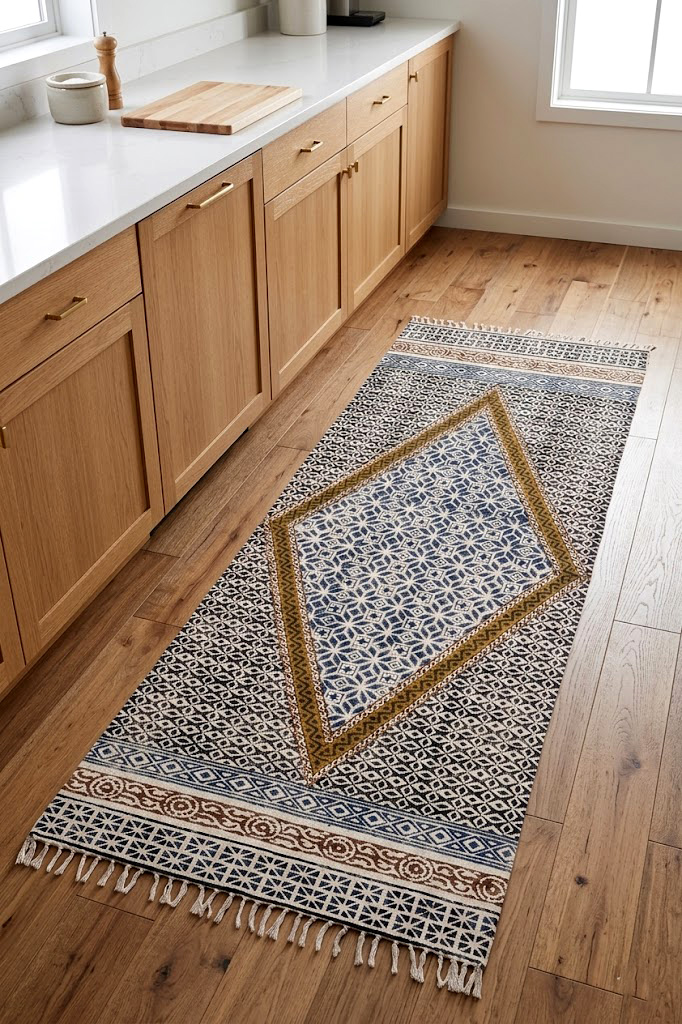
For example, Hand Block Printed Rugs involve printing designs onto the textile surface using carved blocks. Hand Tufted Wool Rugs are created by inserting yarn into a backing to build the pile, while Hand Knotted Rugs are constructed knot by knot.
These aren't interchangeable techniques. They affect appearance, texture, production time, durability, and price.
What to Know About a Rug Factory in India
If you're considering a rug factory India for wholesale production, don't focus only on photographs of finished products.
Ask to understand the production process itself.
A professional manufacturing operation should be able to explain how it handles:
- Raw-material selection
- Dyeing or printing
- Weaving, knotting, tufting or braiding
- Finishing
- Trimming and inspection
- Washing or cleaning where applicable
- Packaging and export preparation
For large orders, consistency becomes just as important as the appearance of the first sample.
Custom Rugs Wholesale: What Should You Specify?
Custom rugs wholesale orders need a much clearer specification than ordinary stock purchases.
At minimum, document:
- Exact dimensions
- Shape
- Material
- Construction method
- Base or backing
- Colors
- Pattern or artwork
- Edge finishing
- Labeling requirements
- Packaging
- Quantity
- Delivery requirements
If possible, approve a physical sample or production sample before committing to a large run. A color that looks perfect on a screen can appear quite different on a physical textile.
Compare Rug Construction Before Ordering
Different rug types suit different applications.
Hand Block Printed Rugs can provide detailed surface patterns with a distinctly artisanal appearance.
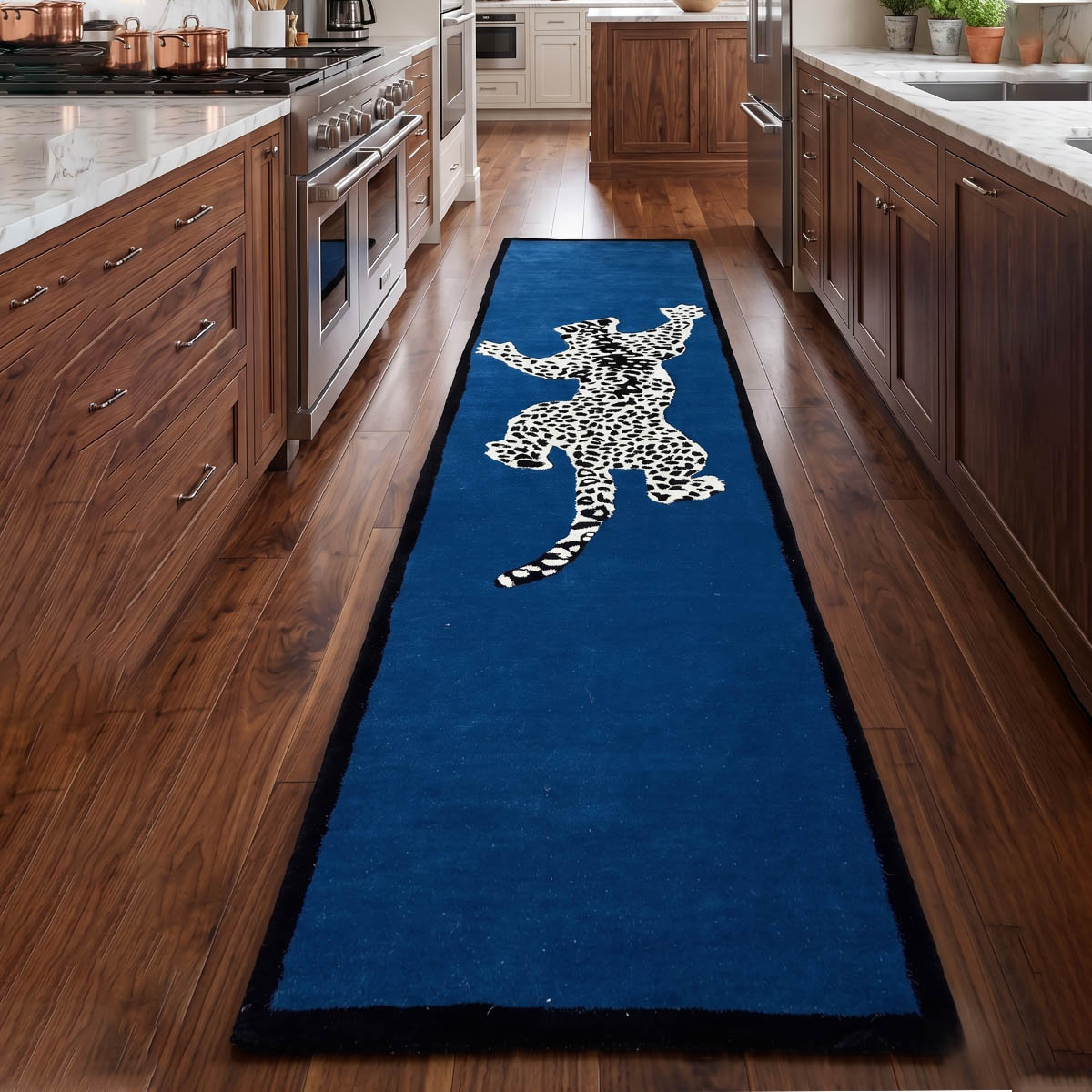
Hand Tufted Wool Rugs are often selected when a softer, more substantial pile is desired.
Hand Knotted Rugs involve a more labor-intensive construction and can offer considerable detail and texture.
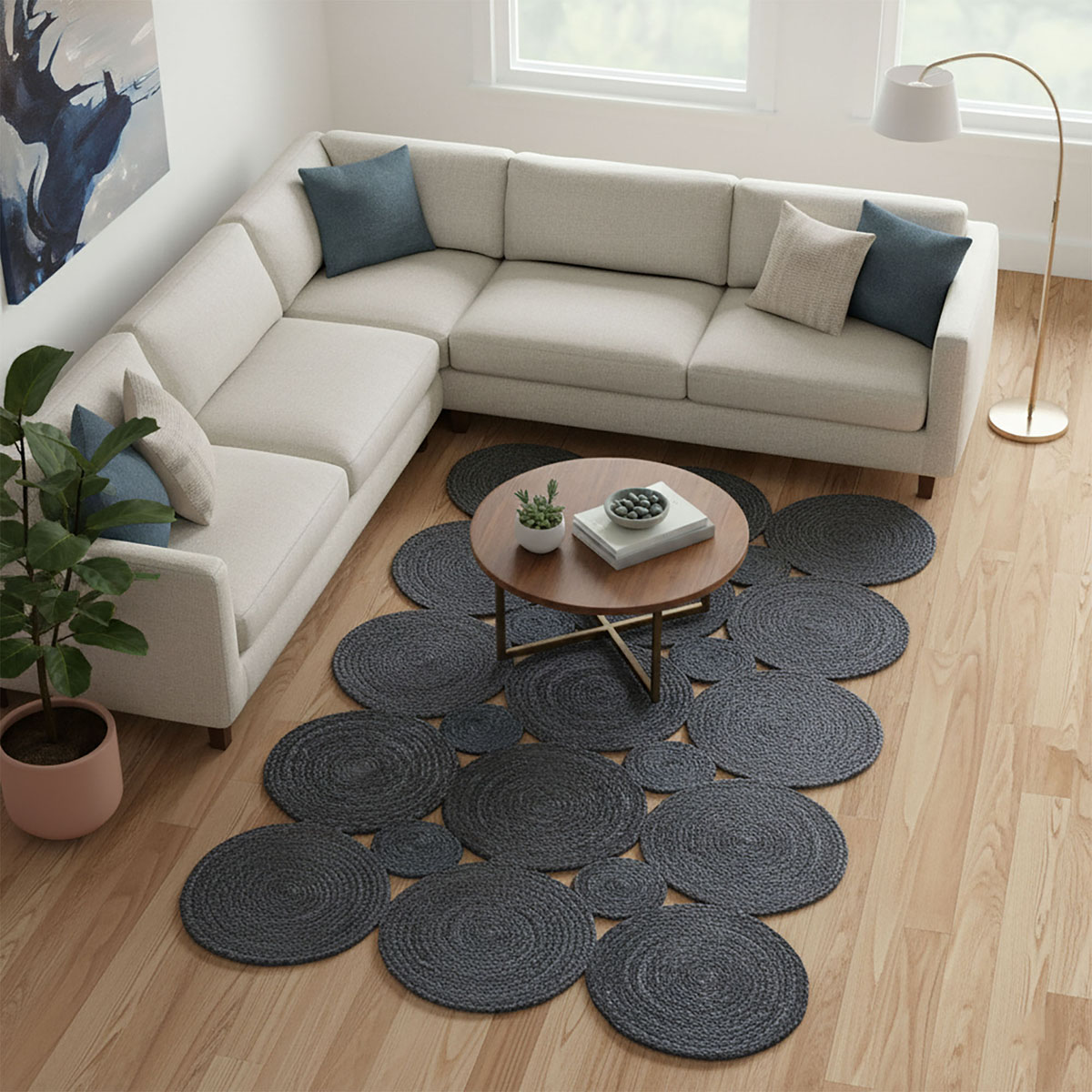
A Hand Braided Jute Rug has an entirely different character, with natural fibers formed into braided structures.
Panja Rugs and traditional woven constructions can also be useful when a project calls for a more visibly handcrafted textile.
Even Prayer Mats may require very different dimensions, materials, finishing, and packaging from standard area rugs.
Questions to Ask Before Placing a B2B Rug Order
Before sending a purchase order, confirm five things in writing:
Specification: Is everyone working from the same approved design and measurements?
Quantity: Are minimum order quantities clear?
Timeline: Does the quoted production period include finishing and packing?
Quality: What happens if part of the shipment doesn't meet the approved standard?
Shipping: Who handles freight, documentation, customs requirements, and delivery?
These details may seem mundane. They're not. In wholesale purchasing, small ambiguities can become large costs.
Final Thoughts
Buying directly from a manufacturer works best when the relationship is treated as a long-term production partnership rather than a one-time bargain hunt.
Take time to understand construction, request samples, document specifications, and ask practical questions before placing a large order. Whether you're sourcing Hand Block Printed Rugs, wool constructions, jute pieces, Panja Rugs, or specialized Prayer Mats, knowing how the rug is made is one of the simplest ways to make better B2B purchasing decisions.
The goal isn't merely to find a rug at the right price. It's to find a manufacturing partner capable of producing the right product, consistently, at the quality and scale your business actually needs.
FAQs
1. What are the benefits of buying rugs direct from a manufacturer?
Buying directly can reduce the number of intermediaries involved and make communication about pricing, specifications, customization, production timelines, and quality control more straightforward. It can be especially useful for retailers, interior designers, hotels, and wholesalers placing larger or repeat orders.
2. What should I ask a rug manufacturer before placing a wholesale order?
Ask about the minimum order quantity, materials, construction method, sample approval, production timeline, quality control, customization options, packaging, and shipping terms. It's also useful to confirm exactly what is included in the quoted price.
3. Can a rug manufacturer produce custom rugs wholesale?
Many manufacturers can produce custom rugs wholesale according to specific dimensions, shapes, colors, patterns, materials, and finishing requirements. However, customization capabilities and minimum quantities vary, so these details should be confirmed before ordering.
4. How can I check the quality of handmade rugs from India?
Request detailed specifications and, where practical, a physical sample before placing a bulk order. Check the material, weaving or construction technique, dimensions, backing, edges, surface consistency, color, and finishing. For repeat orders, compare production samples against the previously approved sample.
5. What is the difference between a rug manufacturer and a rug supplier?
A rug manufacturer is directly involved in producing the rugs, while a rug supplier may manufacture products, source them from other producers, or operate as a distributor. The distinction matters because buyers looking for custom production or private-label collections may need direct access to manufacturing capabilities.